9 Signs of Untreated PTSD at Work: When to Take a Screening Test
Does your job feel harder than it used to? A past traumatic event can cast a long shadow, often affecting your professional life in ways you might not immediately recognize. You may feel on edge, disconnected from your team, or find it difficult to focus, but dismiss it as just stress or a bad week. Yet, for millions of workers, these could be signs of untreated Post-Traumatic Stress Disorder (PTSD) impacting their performance and well-being.

Recognizing these symptoms is the first, most powerful step toward regaining control. This article will walk you through nine common signs of PTSD in the workplace. Understanding them can help you decide when it's time to take a confidential first step, such as an online screening. A science-based PTSD test can provide private, initial insights into what you're experiencing.
This guide is designed to offer clarity, not a diagnosis. Let's explore the behavioral and performance-related signs that may suggest it's time to seek more information.
Recognizing the Behavioral Signs of PTSD in the Workplace
PTSD doesn’t always look like the dramatic flashbacks seen in movies. In a professional setting, the symptoms are often more subtle and can be mistaken for personality traits or workplace stress. Here are three key behavioral changes to watch for.

Hypervigilance and Heightened Alertness at Work
Do you find yourself constantly scanning the room, easily startled by a ringing phone or someone walking up behind you? This state of being "on guard" is called hypervigilance. It’s your nervous system stuck in high-alert mode, a common response after trauma. At work, this can make it incredibly draining to sit through meetings or work in an open-plan office. You may feel perpetually tense, which can exhaust your mental and physical energy long before the workday is over.
Emotional Numbness and Detachment from Colleagues
Feeling disconnected from those around you is another common sign. You might find yourself avoiding team lunches, staying quiet during conversations, or feeling like you're just going through the motions. This emotional numbness is a protective mechanism, your mind’s attempt to shield you from overwhelming feelings. While it can offer temporary relief, it can also lead to isolation and prevent you from building supportive relationships with your colleagues.
Irritability and Workplace Conflicts
Is your patience wearing thin? A shorter fuse, increased irritability, or sudden anger over minor issues can be a direct result of untreated PTSD. The constant stress and hyper-arousal can leave you feeling agitated and on edge. This can unfortunately lead to misunderstandings and conflicts with coworkers or managers, straining professional relationships and creating a negative feedback loop that only adds to your stress.
Performance and Productivity Red Flags
Beyond behavior, untreated PTSD often leaves clear marks on your work performance. If you notice a significant decline in your ability to get things done, it might be more than just a slump. These productivity red flags are important clues.
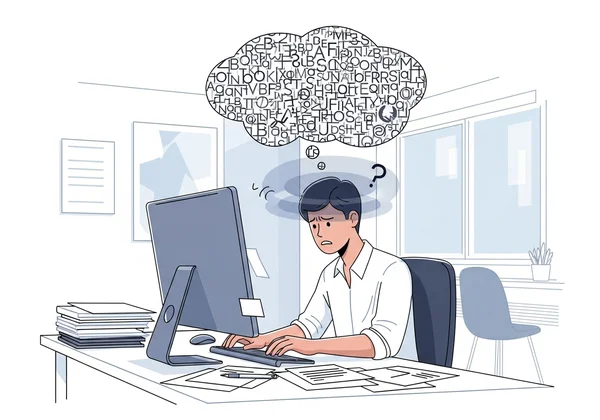
Difficulty Concentrating and Completing Tasks
Trauma can seriously impact your cognitive functions. You might find yourself reading the same email over and over, struggling to follow a conversation, or losing your train of thought mid-sentence. This difficulty concentrating can make it nearly impossible to complete complex tasks or meet deadlines. It’s not a reflection of your ability or intelligence; it's a symptom of a mind working overtime to manage distress.
Increased Absenteeism and Time Management Challenges
Are you calling in sick more often or struggling to get to work on time? PTSD disrupts sleep patterns and causes physical symptoms like headaches and fatigue. Even getting out of bed can feel like an overwhelming challenge. This can lead to increased absenteeism. Furthermore, the cognitive fog and avoidance behaviors associated with trauma can make organizing your day and managing your time feel like an overwhelming challenge.
Avoidance of Work-Related Triggers
Avoidance is a core feature of PTSD. At work, this might mean refusing projects that involve a specific location, person, or task that reminds you of your trauma. For example, a first responder might avoid assignments that seem similar to a past difficult call, or an office worker might dread presentations after a traumatic public experience. This avoidance can limit your career growth and be misinterpreted by others as a lack of ambition or teamwork. Getting a clearer picture of your symptoms with a free PTSD test can be a useful first step in understanding these patterns.
Legal Protections and Workplace Accommodations
Understanding your rights is empowering. If you are struggling with PTSD, you are not alone, and there are legal frameworks in place designed to protect and support you in the workplace. Knowing about them can reduce fear and help you advocate for your needs.
Understanding Your Rights Under ADA and FMLA
In the United States, the Americans with Disabilities Act (ADA) and the Family and Medical Leave Act (FMLA) offer important protections. The ADA considers PTSD a disability if it substantially limits one or more major life activities, which can include working and concentrating. This means you may be entitled to "reasonable accommodations" from your employer. The FMLA allows eligible employees to take unpaid, job-protected leave for specified family and medical reasons, including managing a serious health condition like PTSD.
How to Confidentially Disclose PTSD to Your Employer
The decision to disclose a mental health condition to your employer is a personal one. You are not legally obligated to share your diagnosis unless you are requesting an accommodation. If you do decide to disclose, you can do so confidentially with Human Resources (HR). It's helpful to focus the conversation on your needs and limitations, rather than the details of your trauma. You can simply state that you have a medical condition that requires certain adjustments to perform your job effectively.
Reasonable Accommodations That Can Support Recovery
Reasonable accommodations are modifications to your work environment or schedule that allow you to perform your job. These do not have to be expensive or complicated. Examples include:
- A modified work schedule or flexible hours.
- Permission to work from home on certain days.
- A quieter workspace to reduce distractions.
- Written instructions to aid with concentration issues.
- Time off for therapy appointments.
Requesting these supports can make a significant difference in your ability to manage your symptoms while remaining a productive member of your team.
Taking the Next Step: When and How to Use a PTSD Screening Test
If the signs described in this article resonate with you, taking a screening test can be a crucial and validating next step. It provides a structured way to evaluate your experiences in a completely private setting.
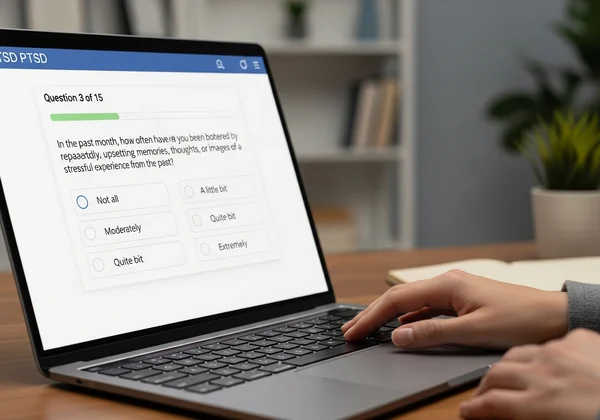
Interpreting Your Test Results in a Workplace Context
An online PTSD screening test, like the one based on the PCL-5 checklist, gives you a score that indicates the likelihood that your symptoms are consistent with PTSD. In a workplace context, this result isn't a diagnosis, but a piece of data. It can help you connect the dots between your score and the challenges you're facing at work, like difficulty concentrating or irritability. It transforms vague feelings of "not being okay" into specific, understandable patterns. For a confidential assessment, you can start your test now.
Using Test Results to Guide Conversations with HR or Therapists
Having your screening results in hand can make conversations with professionals much easier. Rather than saying 'I just feel bad,' you can share your test results. For example: "My screening showed symptoms like hypervigilance and avoidance that are impacting my work performance." This objective information provides a clear, factual starting point for discussions with a therapist, doctor, or even your HR department if you decide to seek accommodations.
Confidential Workplace Resources and Support Options
Many companies offer an Employee Assistance Program (EAP), which provides free, confidential counseling sessions for a variety of personal and work-related issues. This is an excellent, low-risk resource to explore. Your screening results can be a valuable tool to bring to your first EAP session. Taking a moment for a private self-test can equip you with the language to get the most out of these resources.
Your Path to Healing and Workplace Success
As we've explored, these nine indicators of untreated PTSD at work often go unrecognized but can significantly impact your professional life and wellbeing. We also discussed your rights and the practical steps you can take to get support.
Recognizing these signs in yourself is not a sign of weakness—it is an act of profound strength and self-awareness. It's the beginning of a journey toward healing and rediscovering your potential for success and well-being at work. Your experiences are valid, and help is available.
Recognizing yourself in these descriptions is the first step—taking action now can prevent symptoms from escalating and help you regain control of your work experience. Take the first step today. Our free, confidential, and science-based PTSD test can provide you with immediate insights.
Take the Free PTSD Test Now and start your path toward understanding and recovery.
FAQ Section
Can I be fired if I disclose my PTSD diagnosis?
In many countries, like the U.S. under the ADA, it is illegal for an employer to fire you because you have a mental health condition like PTSD. As long as you can perform the essential functions of your job, with or without reasonable accommodations, you are protected from discrimination.
How accurate are online PTSD tests for workplace concerns?
Reputable online PTSD tests, especially those based on clinical standards like the PCL-5, are highly accurate as screening tools. They are not a substitute for a professional diagnosis but are very effective at identifying symptoms that may be impacting your work and well-being. An online screening test can confirm if your concerns warrant a follow-up with a professional.
What should I do if my PTSD symptoms are affecting my job performance?
First, acknowledge what's happening without self-blame. Second, consider taking a confidential screening test to get clarity. Third, use this information to seek support, whether through your company's EAP, a therapist, or your doctor. You may then decide if requesting reasonable accommodations at work is the right step for you.
Are there specific PTSD screening tests for high-stress professions?
While most PTSD tests use a universal standard (like the DSM-5 criteria), the context is key. For high-stress professions like first responders, veterans, or healthcare workers, the types of trauma experienced may be different, but the core symptoms measured by a quality PTSD assessment test are the same. The results can help you understand how your specific occupational stress is manifesting.
Can workplace trauma cause PTSD?
Yes, absolutely. Traumatic events are not limited to combat or major accidents. Experiencing or witnessing a serious workplace accident, workplace violence, assault, or even severe bullying and harassment can be traumatic enough to cause PTSD.