CPTSD Symptoms and How Complex Trauma Can Show Up in Adults
CPTSD symptoms can feel confusing because they are not limited to fear, flashbacks, or obvious trauma reminders. For many adults, complex trauma also changes emotional regulation, self-trust, relationships, sleep, and the body's sense of safety. This guide explains common symptoms of CPTSD in plain English, how they can overlap with PTSD, and what to notice if your experiences feel familiar. It is educational, not a clinical label for your life. If you want a private way to reflect on trauma-related symptoms before speaking with a professional, a confidential PTSD symptom screening tool can be a gentle starting point.

What CPTSD Symptoms Mean
Complex post-traumatic stress disorder, often shortened to CPTSD or C-PTSD, is usually discussed in relation to prolonged or repeated trauma. Examples may include chronic abuse, captivity, ongoing violence, severe neglect, or trauma that happened in a relationship where escape felt impossible or unsafe. People also use the phrase more broadly online, which is why it helps to separate search language from careful mental health language.
PTSD and CPTSD share a core trauma pattern: the nervous system may keep reacting as if danger is still close. That can include intrusive memories, avoidance, hypervigilance, sleep disruption, and feeling on edge. CPTSD adds a wider pattern often called disturbances in self-organization: difficulty managing strong feelings, a painful or negative sense of self, and persistent trouble feeling safe with other people.
There is one important nuance. In the United States, many clinicians use the DSM system, where CPTSD is not usually listed as a separate formal condition. In the ICD system used internationally, CPTSD is described separately from PTSD. For a reader, the practical takeaway is simple: the words may vary by provider or country, but the symptoms are real enough to deserve careful attention and support.
A Practical 17-Symptom Map of Complex PTSD
People often search for "the 17 symptoms of complex PTSD." There is no single official 17-item checklist that can settle the question for everyone. Still, a practical symptom map can help you name patterns before you bring them to a qualified mental health professional.
- Intrusive memories. Past events may enter your mind without permission, sometimes as images, body sensations, or emotional flashes.
- Flashbacks. You may feel pulled back into the trauma, even when part of you knows the present moment is different.
- Nightmares or disturbed sleep. Dreams may repeat themes of danger, helplessness, shame, or escape.
- Avoidance of reminders. You may avoid places, people, conversations, smells, sounds, or media that seem connected to what happened.
- Emotional numbness. Instead of feeling too much, you may feel blank, distant, or unable to access joy.
- Hypervigilance. Your attention may scan for threat, changes in tone, exits, facial expressions, or signs that something is about to go wrong.
- Startle responses. Sudden noises, touch, conflict, or surprise may make your body react quickly.
- Difficulty calming down. Once activated, it may take a long time to return to a steady state.
- Anger, irritability, or shutdown. Strong emotion may come out as conflict, silence, freezing, people-pleasing, or leaving the situation.
- Shame or guilt. You may carry responsibility for things that were not yours to carry.
- A harsh inner critic. The mind may repeat messages such as "I am too much," "I am unsafe," or "I ruin things."
- Feeling permanently different. Some people describe feeling damaged, separate from others, or unable to imagine a stable future.
- Dissociation. You may feel unreal, detached from your body, foggy, or as if you are watching life from a distance.
- Relationship mistrust. Trust may feel risky, even with people who have not harmed you.
- Fear of abandonment or closeness. Connection may feel necessary and threatening at the same time.
- Boundary confusion. You may over-explain, over-give, withdraw suddenly, or struggle to know what you are allowed to need.
- Physical stress symptoms. Muscle tension, stomach upset, headaches, fatigue, chest tightness, and body pain can appear when the stress system stays activated.
CPTSD Symptoms vs PTSD Symptoms
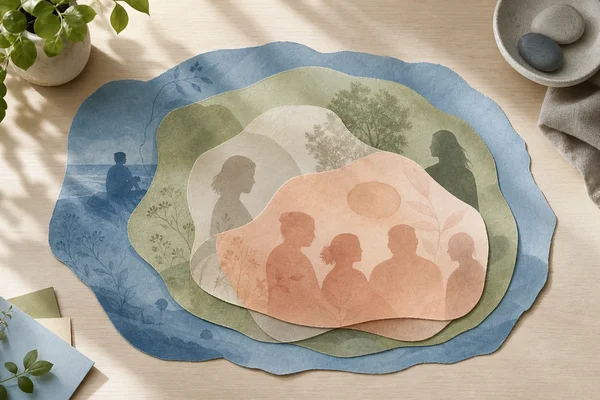
CPTSD vs PTSD symptoms are best understood as overlapping circles, not as two totally unrelated experiences. PTSD symptoms often center on re-experiencing, avoidance, negative mood or beliefs, and arousal after trauma. CPTSD includes those patterns and adds more persistent changes in emotional regulation, identity, and relationships.
| Area | PTSD pattern | CPTSD pattern |
|---|---|---|
| Trauma history | May follow one event or repeated events | Often linked with repeated, prolonged, or interpersonal trauma |
| Re-experiencing | Flashbacks, intrusive memories, nightmares | Same core symptoms may appear, sometimes with strong shame or body memory |
| Avoidance | Avoiding reminders of the event | Avoidance may include people, closeness, needs, conflict, or identity-related triggers |
| Safety system | Hypervigilance, startle response, irritability | A more constant sense that danger, rejection, or control loss is near |
| Self-concept | Negative beliefs can occur | Worthlessness, shame, or feeling fundamentally flawed may be more central |
| Relationships | Trust and closeness can be affected | Long-term patterns of mistrust, withdrawal, fawning, conflict, or fear of dependence may stand out |
If you are trying to understand PTSD vs CPTSD symptoms, a PCL-5 based PTSD self-check can help organize the PTSD side of the picture. It cannot cover every CPTSD concern, but it may give you a clearer starting language for symptoms such as avoidance, intrusions, and hyperarousal.

How Symptoms May Look in Women and Men
Searches for complex PTSD symptoms in women often point to shame, self-blame, people-pleasing, dissociation, relationship fear, and the pressure to appear "fine." Those patterns can be real for many women, especially when trauma involved coercion, neglect, social silencing, or repeated boundary violations. Social expectations can make some people turn distress inward instead of asking for help.
CPTSD symptoms in men can be missed for a different reason. Some men may show anger, emotional distance, risk-taking, work overcontrol, substance use, or refusal to talk about fear because sadness and vulnerability were treated as unacceptable. Others experience the same inward symptoms often described by women but feel even less permission to name them.
Gender is not a rulebook. Trauma history, culture, family roles, identity, disability, race, sexuality, military experience, and access to support all shape how symptoms appear. A useful question is not "Do I look like the stereotype?" but "What changed in my emotions, body, relationships, and sense of safety after prolonged stress or harm?"
Physical Symptoms and Daily-Life Clues
CPTSD physical symptoms do not mean the trauma is "all in the body" or "all in the mind." They mean the body and mind are connected. When the stress system stays alert for a long time, daily life can start to feel physically expensive.
Common clues include waking up exhausted, clenching your jaw, holding your breath, stomach discomfort before certain conversations, headaches after conflict, difficulty concentrating, a racing heart around reminders, or feeling heavy and slow after emotional stress. Some people also notice a pattern of overfunctioning during the day and collapsing at night.
Because physical symptoms can have many causes, they deserve ordinary medical care too. It can help to track when symptoms appear, what was happening before them, how long they last, and what helps your body settle. A simple note such as "argument at lunch, chest tightness for two hours, eased after walking" can be more useful than trying to interpret everything at once.
What Not to Do to Someone With Complex PTSD
The worst thing to do to someone with complex PTSD is usually not one dramatic mistake. It is a pattern of pressure, disbelief, control, or blame that repeats the emotional shape of earlier harm.
Avoid telling someone they are overreacting, demanding details before they are ready, turning their symptoms into a character flaw, using their trauma history against them during conflict, or forcing surprise touch, confrontation, or exposure. Also avoid making yourself the judge of whether their memory, body response, or boundaries are "reasonable."
Better support sounds steadier: "I believe this feels real for you," "Would space or company help more right now?" "I can slow down," or "We can talk about this when both of us are grounded." Support does not mean agreeing to unsafe behavior or ignoring your own needs. It means choosing clarity, consent, and repair over pressure.
What to Do if CPTSD Symptoms Feel Familiar
If CPTSD symptoms feel familiar, try to move slowly and practically. You do not need to solve your whole history in one night. Start by naming patterns: what activates you, what helps you return to the present, which relationships feel steady, and which situations repeatedly leave you ashamed, numb, or unsafe.
Then consider support that matches your level of distress. That might mean talking with a trauma-informed therapist, a primary care provider, a trusted support person, or a crisis service if you feel at risk of harming yourself or someone else. In the U.S., calling or texting 988 can connect you with immediate crisis support.
For self-reflection, you can also use an educational PTSD screening starting point to organize trauma-related symptoms before a professional conversation. Treat any score as information, not a verdict. The most useful next step is the one that helps you understand your symptoms with more safety, steadiness, and support.

FAQ
What are the 17 symptoms of CPTSD?
A practical 17-symptom map can include intrusive memories, flashbacks, nightmares, avoidance, numbness, hypervigilance, startle responses, difficulty calming, anger or shutdown, shame, a harsh inner critic, feeling different or damaged, dissociation, mistrust, fear of closeness, boundary confusion, and physical stress symptoms. This is an educational map, not an official checklist for every person.
How do you tell if you have CPTSD?
You can look for patterns after prolonged or repeated trauma: PTSD-like symptoms plus long-running difficulty with emotions, self-worth, and relationships. Only a qualified mental health professional can evaluate your full history and symptoms. Self-reflection tools and symptom notes can help you prepare for that conversation.
How do you treat CPTSD?
Many people benefit from trauma-focused therapy, skills for emotion regulation, relationship support, and care for sleep, anxiety, depression, or body stress. The right approach depends on your symptoms, history, safety, and preferences. A mental health professional can help you compare options.
What are the 4 Fs of complex PTSD?
The 4 Fs are fight, flight, freeze, and fawn. They describe common survival responses. Fight may look like anger or control, flight like overworking or escaping, freeze like numbness or shutdown, and fawn like people-pleasing to reduce danger. These responses are not moral failures; they are patterns that can become easier to notice and work with.
Are CPTSD symptoms different from PTSD symptoms?
They overlap. CPTSD includes many PTSD symptoms, such as flashbacks, avoidance, and hypervigilance, but it also tends to involve deeper patterns in emotion regulation, identity, shame, and relationships. The exact wording may differ depending on the clinical system and country.
Can CPTSD symptoms appear in adults years later?
Yes, some adults notice symptoms years after prolonged trauma, especially when a new relationship, loss, conflict, caregiving role, workplace stress, or life transition activates old survival patterns. A delayed pattern still deserves care and support.
Why do CPTSD symptoms feel so familiar on Reddit?
Reddit posts can make people feel less alone because they describe lived experience in everyday language. Still, personal stories vary widely and can be incomplete or inaccurate. Use online communities for connection, not as the final word on your mental health.