PTSD Test Science: How Your Results Are Determined
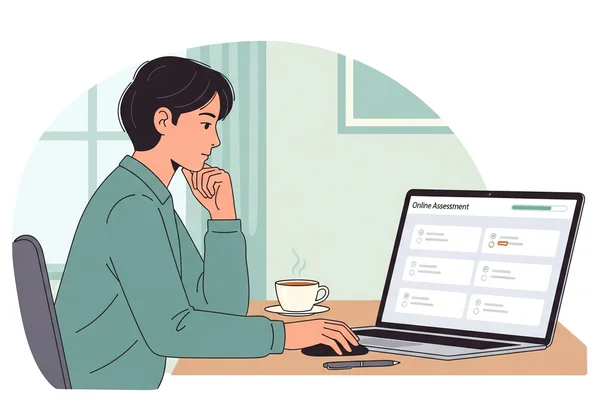
Have you ever taken an online quiz and wondered what happens behind the scenes? When it comes to mental health, understanding the process is crucial for trust and clarity. You might be asking, "How does an online PTSD test actually calculate my results?" It’s not a random guess. Reputable assessments are built on decades of scientific research designed to identify specific patterns of symptoms.
This article pulls back the curtain on the science behind PTSD assessment. We will explore the frameworks that professionals use, explain how your answers are translated into a meaningful score, and clarify what those results truly mean for you. Learning how your PTSD test works can turn uncertainty into clarity, helping you take that first important step toward understanding yourself. At PTSDTest.net, we believe that knowledge is empowering, which is why our confidential PTSD test is based on established scientific standards.
How PTSD Assessment Works: The Scientific Framework
The goal of a PTSD assessment isn't to apply a label but to measure the presence and severity of symptoms related to a traumatic experience. This process needs a reliable and consistent structure to be helpful. That’s where scientific frameworks come in, providing a standardized way to understand what someone is going through.
What is PTSD and Why is Accurate Testing Crucial?
Post-Traumatic Stress Disorder (PTSD) is a mental health condition that some people develop after experiencing or witnessing a shocking, scary, or dangerous event. While it's normal to have upsetting memories or feel on edge after trauma, these reactions become PTSD when they last for months or years and interfere with daily life.
Accurate testing is vital because the symptoms of PTSD can overlap with other conditions like anxiety or depression. A well-designed test helps distinguish these symptoms by focusing on the specific clusters of reactions tied to trauma. This ensures that the insights you receive are relevant and point you in the right direction, providing a clear picture instead of more confusion.
The Role of Screening vs. Clinical Diagnosis
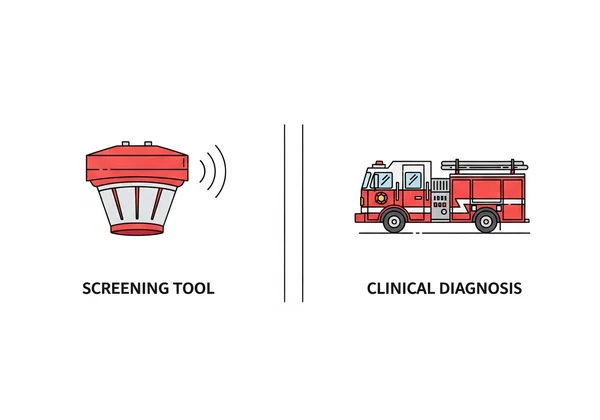
It is essential to understand the difference between a screening tool and a clinical diagnosis. Think of it like this: an online PTSD test is like a smoke detector. Its job is to alert you to the potential presence of a problem. It’s a highly effective first-alert system that is quick, accessible, and private.
A clinical diagnosis, on the other hand, is like the fire department arriving. A trained mental health professional conducts a comprehensive evaluation. They talk with you, consider your full history, and rule out other potential causes for your symptoms. An online screening tool is a powerful first step, but a formal diagnosis can only be made by a qualified healthcare provider.
The PCL-5 Scoring Method Explained
To ensure accuracy and reliability, PTSDTest.net uses a framework consistent with the PCL-5. The PTSD Checklist for DSM-5 (PCL-5) is a globally recognized and respected screening tool used by clinicians, researchers, and organizations like the U.S. Department of Veterans Affairs. It is designed to measure the 20 symptoms of PTSD outlined in the leading diagnostic manual.
Deconstructing the PCL-5: Key Symptom Clusters
The PCL-5 organizes PTSD symptoms into four distinct categories, or "clusters." Understanding these clusters helps you see how different experiences connect to form a larger pattern. Your responses on the test help identify which of these areas are causing you the most distress.
- Cluster 1: Intrusion Symptoms: This involves re-experiencing the traumatic event in unwanted ways. Examples include having flashbacks, upsetting dreams or nightmares, or intense emotional distress when reminded of the event.
- Cluster 2: Avoidance: This refers to actively trying to avoid reminders of the trauma. This can mean staying away from people, places, or activities that bring the event to mind, or trying not to think or talk about what happened.
- Cluster 3: Negative Alterations in Cognition and Mood: This cluster covers persistent negative thoughts and feelings. You might struggle with negative beliefs about yourself or the world, feel detached from others, lose interest in activities you once enjoyed, or be unable to experience positive emotions.
- Cluster 4: Alterations in Arousal and Reactivity: These symptoms relate to feeling constantly on edge or alert. This can manifest as irritability, angry outbursts, reckless behavior, being easily startled, or having trouble concentrating or sleeping.
From Responses to Scores: How Severity is Measured
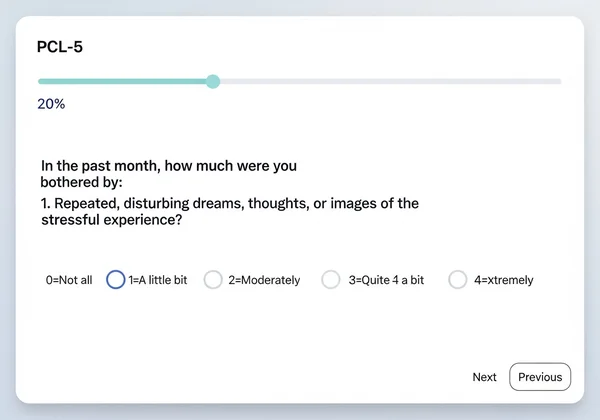
The PCL-5 uses a simple and effective scoring system. For each of the 20 symptom questions, you rate how much you have been bothered by that symptom over the past month on a 5-point scale:
- 0 = Not at all
- 1 = A little bit
- 2 = Moderately
- 3 = Quite a bit
- 4 = Extremely
The scoring method is scientific. Your total score is calculated by adding up the numbers from each of your answers. This final number provides a quantitative measure of your PTSD symptom severity. A higher score suggests that symptoms are more frequent and distressing. This indicates a greater likelihood that you may meet the criteria for PTSD and should seek a professional consultation. You can take the test yourself to see how this simple, structured process works.
Understanding Your PTSD Test Results and Their Reliability
Receiving a score can bring up a lot of questions. Is it accurate? What does this number actually mean for my life? This is where we move from the science of scoring to the art of interpretation, always remembering that the result is a guide, not a judgment.
Interpreting Your PTSDTest.net Results: What Do the Scores Mean?
Your score on our free PTSD test is a snapshot of your current symptoms. It is not a definitive label. Instead, think of it as a helpful data point that reflects your experiences over the last month.
A higher score often indicates that the symptoms you are experiencing are significant and are likely impacting your well-being. This is a strong signal that speaking with a doctor or mental health therapist would be a beneficial next step. A lower score might suggest that your symptoms are milder, or that you may be dealing with something other than PTSD. Either way, the score gives you a baseline for understanding and a starting point for a conversation.
How Accurate are Online PTSD Tests? Fact vs. Fiction
One of the biggest questions people have is: "How accurate are online PTSD tests?" The fact is, when based on standardized, validated tools like the PCL-5, they are highly reliable for screening purposes. Studies have shown the PCL-5 to be a strong instrument for identifying individuals who may have PTSD.
However, their accuracy depends on honest self-reporting. The test can only be as accurate as the answers you provide. The main limitation is that it cannot account for context, rule out other conditions, or understand your unique life situation. That is why it remains a screening tool and not a diagnostic one. It accurately identifies a potential problem but doesn't provide the full story.
The Importance of Professional Follow-Up
No matter your score, the most responsible and empowering action you can take after an online test is to consider a professional follow-up. Your results can be an incredibly useful tool to bring to a doctor, therapist, or counselor.
Sharing your score can help you start a difficult conversation. It gives the professional a clear and structured summary of your symptoms. This saves time and allows them to focus on what matters most: helping you. The test provides the "what," and a professional can help you understand the "why" and "what's next."

Empowering Yourself with Knowledge: Your Next Steps
Understanding the science behind PTSD testing demystifies the process. It turns an online quiz into a credible tool for self-discovery. You now know that assessments like the one on PTSDTest.net are not random. They are based on the PCL-5, a globally recognized standard that measures specific symptom clusters to determine severity.
Here's what to remember:
- Screening is Not Diagnosis: Online tests are reliable first-alert systems, not a final judgment.
- Scores Measure Severity: Your result reflects the impact of symptoms, providing a clear starting point.
- Knowledge is Power: Understanding your symptoms is the first step toward managing them.
This knowledge empowers you to take control of your well-being. An online test can be the confidential, accessible first step you need to move from a place of uncertainty to one of clarity and action.
Ready to take an informed first step? Start your confidential PTSD test today and gain valuable insight into your well-being.
Frequently Asked Questions About PTSD Test Science
How accurate are online PTSD tests like the PCL-5?
When based on a validated tool like the PCL-5, online tests are considered highly accurate for screening purposes. They effectively identify individuals who are likely experiencing significant PTSD symptoms. However, they are not a substitute for a formal clinical diagnosis from a healthcare professional.
Can I self-diagnose PTSD based solely on an online test?
No. Self-diagnosis is not recommended. An online test is an excellent tool for self-awareness and can indicate a high probability of PTSD. However, a formal diagnosis requires a comprehensive evaluation by a qualified professional. This professional will consider your full medical history and rule out other conditions.
What specific symptoms does the PCL-5 measure?
The PCL-5 measures 20 symptoms across four main clusters: intrusion (e.g., flashbacks, nightmares), avoidance (e.g., staying away from reminders), negative changes in thoughts and mood (e.g., guilt, detachment), and changes in arousal and reactivity (e.g., irritability, being easily startled).
What should I do if my online PTSD test results are concerning?
If your results indicate a high level of symptoms, the most important next step is to speak with a doctor or a mental health professional. You can share your results from the online PTSD test with them. This can help start the conversation and provide a clear picture of what you have been experiencing.
How is the PCL-5 standard different from a clinical diagnosis?
The PCL-5 is a standardized questionnaire that produces a symptom severity score. It's one piece of data. A clinical diagnosis is a much broader process conducted by a professional. It includes a clinical interview, a review of your personal and medical history, and an assessment of how symptoms impact your daily functioning.