PTSD vs ADHD Symptoms: How to Differentiate and Test
Living with undiagnosed trauma or neurodivergence can feel like solving a puzzle with missing pieces. This is especially true when symptoms overlap between Post-Traumatic Stress Disorder (PTSD) and Attention-Deficit/Hyperactivity Disorder (ADHD). Many adults find themselves asking: Are my focus issues and emotional shifts caused by my past or the way my brain is wired?
Understanding the difference between these two conditions is essential for getting the right support. While they look similar on the surface, the "why" behind the symptoms is very different. It is also quite common for people to experience both conditions at the same time, which is known as comorbidity. If you are feeling overwhelmed by your symptoms, taking a free online screening can be a helpful first step in finding clarity.
This guide will break down the core differences, the areas where they overlap, and how you can begin to differentiate trauma responses from neurodivergence. It takes courage to seek answers—and this is your first step toward taking control of your well-being.
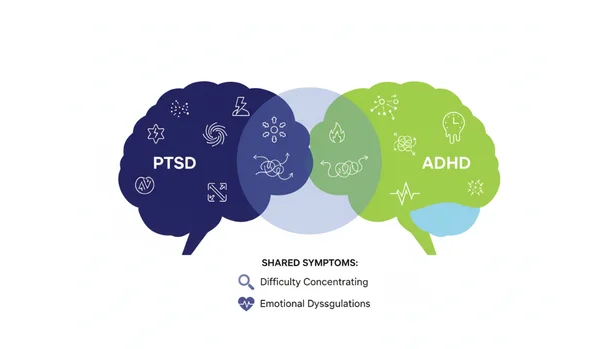
Understanding PTSD and ADHD Core Differences
To distinguish between PTSD and ADHD, we must first look at where these conditions come from and how they develop over time. Although a person might struggle to pay attention in a meeting or feel "on edge" in both cases, the biological and psychological roots are distinct.
How PTSD Develops After Trauma
PTSD is an acquired condition. It is rooted in traumatic experiences—events where a person felt their life or safety was threatened. This trauma causes the nervous system to remain in a state of high alert long after the danger has passed. The body becomes "stuck" in a survival mode, constantly scanning for threats that are no longer there.
How ADHD Manifests from Childhood
In contrast, ADHD is a neurodevelopmental condition. This means it is typically present from birth and has strong genetic components. ADHD affects how the brain processes dopamine and manages "executive functions" like planning, timing, and impulse control. While trauma can sometimes mimic ADHD symptoms, ADHD itself is not caused by life events. It is a fundamental part of how a person’s brain is structured and organized.
Diagnostic Criteria Overview
Professional clinicians use the DSM-5 (the manual for mental health) to tell these two apart. A PTSD diagnosis requires exposure to trauma and symptoms in four areas. These are: intrusive memories, avoidance behaviors, negative mood shifts, and hyperarousal. These symptoms change the way a person interacts with the world based on their past experiences.
ADHD diagnostic criteria focus on a persistent pattern of inattention, hyperactivity, and impulsivity that interferes with functioning. These symptoms must have been present before age 12. While a person with PTSD might be "distracted" because they are scanning the room for exits, a person with ADHD is usually distracted because their brain has moved on to a more interesting thought or sound. If you suspect your symptoms are tied to specific memories, you may want to start your PTSD screening test to see if you align with PTSD markers.
Symptom Overlap: Why PTSD and ADHD Are Often Confused
It is very common for PTSD to be misdiagnosed as ADHD, or vice versa, because they share several "surface" symptoms. Both conditions can make it hard to hold a job, maintain relationships, or stay organized.
Attention and Concentration Challenges
Both conditions cause significant trouble with focus, but the mechanism is different. In PTSD, attention issues are often caused by hypervigilance or dissociation. If your brain is constantly checking for danger, it cannot focus on a spreadsheet. Flashbacks can also "pull" your mind away from the present moment, making you appear distracted.
In ADHD, the difficulty is neurologically based. The brain struggles to sustain focus on tasks that are not naturally stimulating. A person with ADHD might lose their keys because they weren't "filing" the memory of where they put them. Conversely, a person with PTSD might lose their keys because they were in a state of high anxiety or "numbness" at the time.

Emotional Dysregulation Patterns
Emotional "explosions" or mood swings are common in both. However, the triggers usually differ. In PTSD, emotional reactions are typically tied to trauma reminders (triggers). A loud noise or a specific smell might cause a sudden burst of anger or fear. These reactions are part of the body's survival instinct.
In ADHD, intense emotions are often tied to frustration, boredom, or overstimulation. This is sometimes called "rejection sensitive dysphoria" or simply emotional impulsivity. The reaction is usually about the immediate situation rather than a past event. Understanding these patterns is key, and using a ptsd self test can help you identify if your emotional shifts are linked to traumatic "echoes."
Differentiating Trauma Responses from Neurodivergence
If you are trying to figure out which condition fits your experience better, it helps to look at the timeline of your life and the specific contexts in which your symptoms appear.
When Do Symptoms Start? PTSD vs ADHD Testing Clues
One of the most reliable ways to tell the difference is to look at when the symptoms started. Since ADHD is neurodevelopmental, the symptoms almost always appear in childhood. Even if a person wasn't diagnosed until adulthood, they can usually look back and see that they struggled with focus or energy in grade school.
Did your symptoms start after trauma—like a car accident or toxic relationship in adulthood? Unlike ADHD—which begins in childhood—this pattern suggests PTSD. However, it is important to note that trauma can "unmask" or worsen underlying ADHD. This makes the two even harder to separate without a professional online ptsd test as a starting point.
Contextual Patterns and Triggers
Another clue is where and when the symptoms happen. ADHD is "pervasive," meaning it generally shows up in all areas of life—school, work, home, and hobbies. While a person might focus better on things they love, the underlying brain structure remains the same across all environments.
PTSD symptoms are often contextual. You might feel perfectly fine and focused in a quiet library but become completely unable to function in a crowded grocery store that feels "unsafe." If your symptoms fluctuate wildly based on how safe or "triggered" you feel, trauma may be the primary driver. Asking yourself, "Do I feel this way everywhere, or just when I'm stressed?" can provide valuable insight.
The Challenge of Dual Diagnosis: When PTSD and ADHD Coexist
Real life is rarely as simple as a single diagnosis. Many people actually have both PTSD and ADHD. This is a complex situation that requires a nuanced approach to treatment. Recognizing complex PTSD symptoms alongside neurodivergent traits can help you find a more tailored path to wellness.
Recognizing Combined Presentations
Research suggests that people with ADHD may be more vulnerable to developing PTSD. This is because ADHD can lead to more high-risk situations. Additionally, the ADHD brain experiences the world more intensely, making traumatic events feel even more overwhelming.
When both are present, they can feed into each other. For example, the impulsivity of ADHD might make it harder to use the grounding techniques needed to manage a PTSD flashback. Conversely, the chronic stress of PTSD can exhaust the brain's "executive battery." This makes ADHD symptoms like forgetfulness and disorganization much worse. Recognizing this overlap is the first step toward a comprehensive ptsd assessment test that looks at your whole experience.
Treatment Considerations for Co-occurring Conditions
If you have both, treating just one might not be enough. For instance, taking stimulants for ADHD might actually increase the anxiety or physical "jitters" associated with PTSD. On the other hand, focusing only on trauma therapy might not help with the lifelong organizational struggles of ADHD.
Many people find that combining strategies works best. This might involve:
- Therapy: Like EMDR or CBT to process trauma.
- Skill Building: Learning executive function strategies for ADHD.
- Medication Management: Working closely with a doctor to find a balance that helps focus without increasing hyperarousal.
The value of an accurate screening cannot be overstated. It ensures that your healthcare provider has the right map to guide your recovery.
If You’re Struggling to Make Sense of Your Symptoms, Remember This...
Distinguishing between PTSD and ADHD is not just about labels. It is about finding the right tools to build a better life. While the symptoms of inattention and emotional shifts overlap, the origins in trauma versus neurobiology require different paths to healing.
Remember these key takeaways:
- ADHD is generally lifelong and present in multiple contexts.
- PTSD is linked to specific traumatic events and involves "re-experiencing" those events.
- It is possible—and common—to have both conditions simultaneously.
Validation is the beginning of progress. If you are tired of wondering why your brain feels like a "puzzle with missing pieces," take a moment to view your PTSD test results through a confidential screening. This information can be a powerful bridge to your next conversation with a doctor or therapist. You don't have to navigate this confusion alone.

Frequently Asked Questions About PTSD and ADHD Differences
Can trauma cause ADHD-like symptoms in adults?
Yes, trauma can cause "acquired" symptoms that look exactly like ADHD. This includes difficulty concentrating, restlessness, and impulsivity. This happens because the brain’s "alarm system" is so active that it interferes with the "thinking" part of the brain. To see if your symptoms align with trauma, you can try our free tool for a quick screening.
How do I know if my concentration problems are from PTSD or ADHD?
Look for "hypervigilance." If your lack of focus is caused by being easily startled, checking doors, or feeling a sense of "doom," it is likely PTSD. If your lack of focus is caused by your mind wandering to interesting new ideas or being bored by repetitive tasks, it may be ADHD.
Can someone have both PTSD and ADHD?
Absolutely. This is called comorbidity. Having ADHD can sometimes make the symptoms of PTSD feel more intense because the brain already struggles with emotional regulation. Proper diagnosis for both is crucial for effective treatment.
What tests can help differentiate between PTSD and ADHD?
Professionals use clinical interviews and standardized scales. For PTSD, the PCL-5 is a widely respected tool. While ADHD requires a different type of developmental history, you can start your journey online to rule in or rule out the trauma component of your symptoms.
Does childhood trauma increase the risk of developing ADHD later?
Trauma does not "cause" the genetic condition of ADHD, but early childhood trauma can fundamentally change brain development. These changes often mimic ADHD traits. This is why many experts emphasize "trauma-informed care" when evaluating neurodivergent traits in adults.