When to Retake a PTSD Test: Tracking Symptoms Safely
This question comes up often. Many people want to repeat a PTSD test after a difficult week, a therapy session, a triggering event, or a stretch of better sleep.
That instinct is understandable. When symptoms rise and fall, a new score can feel like a quick way to check whether things are getting worse or better.
The problem is that repeat screening only helps when the test is used for the job it was designed to do. A PTSD self-screen can support reflection and follow-up. It cannot provide instant certainty after every bad day, and it should not replace professional care when symptoms are intense or safety is a concern.
That is why a calmer approach often works best. Use the PTSD screening homepage as a structured checkpoint, not as an emergency answer machine.
Disclaimer: The information and assessments provided are for educational purposes only and should not replace professional medical advice, diagnosis, or treatment.

Why people retake a PTSD test after a hard week
Retesting usually starts with a real question. Someone may wonder whether therapy is helping. Someone else may notice more nightmares, more avoidance, or a stronger startle response after a trigger. Another person may feel better for the first time in months and want proof that recovery is real.
Those are reasonable concerns, but they can lead to two very different habits. One habit uses retesting as a spaced way to notice patterns over time. The other uses retesting for reassurance after every difficult moment. Only the first habit gives scores enough context to be useful.
The goal of this article is not to discourage follow-up screening. It is to help readers know when a repeat score can add useful information and when the next step should be support, treatment, or rest rather than another questionnaire.
What a repeat PTSD test can and cannot measure
Repeat screening makes more sense when readers understand what the tool actually measures.
The PCL-5 looks at the past month, not one bad day
That time window matters. The VA's National Center for PTSD says the PCL-5 is a 20-item self-report measure that assesses the 20 DSM-5 symptoms of PTSD. Its sample item asks about symptoms in the past month. See the [VA overview of the PCL-5].
That time window is one of the biggest reasons people misread repeat scores. If a person retakes the test the day after a trigger, most of the reporting period is still the same as it was on the previous attempt. A new number may feel urgent, but it may not represent a truly new pattern.
The PCL-5 self-check tool is more helpful when it is used to reflect on a broader stretch of symptoms. That makes the result easier to compare and less likely to become a reaction to one difficult moment.
Why repeat scores need context, not panic
A repeat score is only one signal. The VA also notes that the PCL-5 can be used for monitoring symptom change during and after treatment. That framing makes retesting part of follow-up rather than constant checking. On the same page, the VA says 10 points is suggested as an indicator of response, and one study found that a score below 28 can indicate clinically significant change.
Those details are helpful for one reason: they show that tiny score shifts should not be overread. A one-point or two-point change may say less than the bigger story around sleep, avoidance, flashbacks, irritability, work functioning, or how safe a person feels in daily life.
A repeat PTSD test works best when it sits beside real context. Think about what happened during the month, whether treatment changed, whether triggers increased, and whether symptoms began interfering more or less with everyday routines.
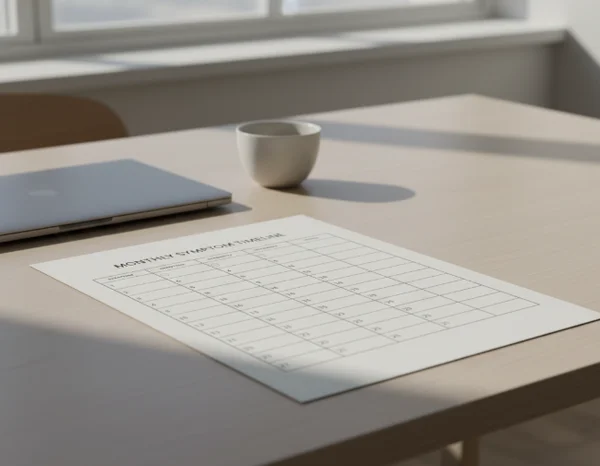
Three situations when retesting can make sense
A new score is most useful when there is a clear reason for retesting.
After enough time has passed since the last screen
Because the PCL-5 asks about the past month, spacing matters. Retaking too soon can create the illusion of precision without adding much new information. In many cases, waiting until enough time has passed to create a meaningfully different symptom window gives a clearer result.
That does not mean readers must follow a rigid calendar. It means the retest should reflect a new stretch of experience, not the same week with a different mood.
During treatment or recovery tracking
The VA says the PCL-5 can be used to monitor symptom change during and after treatment. That makes repeat screening more useful when a reader is already in therapy, starting medication, building a recovery routine, or checking how symptoms shift across a broader care plan.
In that setting, a repeat score can support a conversation. It can help someone name specific changes. A reader may say, "my nightmares are less frequent." Another may say, "I still avoid driving," or "my body feels less on edge than it did last month." That is more useful than chasing a single number by itself.
When symptoms clearly worsen or improve
Retesting can also make sense after a visible change in functioning. Maybe flashbacks are more frequent, sleep has collapsed, or a person has started feeling safer and more present again. A repeat screen can help organize those changes into a clearer snapshot.
The important word is clearly. If the change is obvious across daily life, a retest may help describe it. If the urge comes from panic after one trigger, the score is more likely to add noise than insight.

When retaking a PTSD test is not enough
There are times when another online score is not the right next step.
Retesting for reassurance after every trigger
PTSD symptoms can spike after reminders, conflict, sleep disruption, or stress. That does not mean a person needs a new score each time. Frequent retesting can quietly turn the screen into a reassurance ritual, especially when the person is already overwhelmed and hoping the next number will settle the fear.
In that moment, grounding, support, symptom notes, or stepping away from the screen may be more helpful than repeating the questionnaire. The anonymous symptom check-in is most useful when it supports understanding, not when it becomes part of the distress cycle.
When to contact a clinician or crisis support
Sometimes retesting is not the next step. If trauma symptoms are making daily life feel unsafe or functioning is falling apart, it is time to talk to a clinician or other qualified professional. The same is true if the result brings intense distress.
NIMH says a primary care provider can perform an initial mental health screening and refer someone to a mental health professional. NIMH also says people in emotional distress can call or text 988 for immediate support. See [NIMH help for mental health concerns].
Seek professional help right away if symptoms persist. Do the same if there are urges to harm yourself or someone else, or if fear, dissociation, panic, or shutdown is making it hard to function. A crisis line, doctor, therapist, or emergency service can offer the kind of support an online screening cannot.
Safer next steps after a repeat PTSD score
A repeat score should serve a purpose. The best answer to when to retake a PTSD test is not "as often as possible." Retest when a new score will reflect a meaningfully different stretch of symptoms and help guide a safer next step.
Use repeat screening to notice broader patterns, support treatment conversations, or describe meaningful changes over time. Do not use it as proof that you are safe or unsafe in the middle of every difficult moment.
If you want a calmer follow-up point, the online PTSD screening can work as an educational check-in. If symptoms are worsening, daily life is shrinking, or safety feels shaky, seek licensed professional support instead of waiting for the next score.